
Vladimir Putin Biography
Early Life, Education, KGB Career, Presidency, Achievements and Controversies Quick Biography Facts Information Details Full Name Vladimir Vladimirovich Putin Popular Name Vladimir Putin Date of Birth October 7, […]
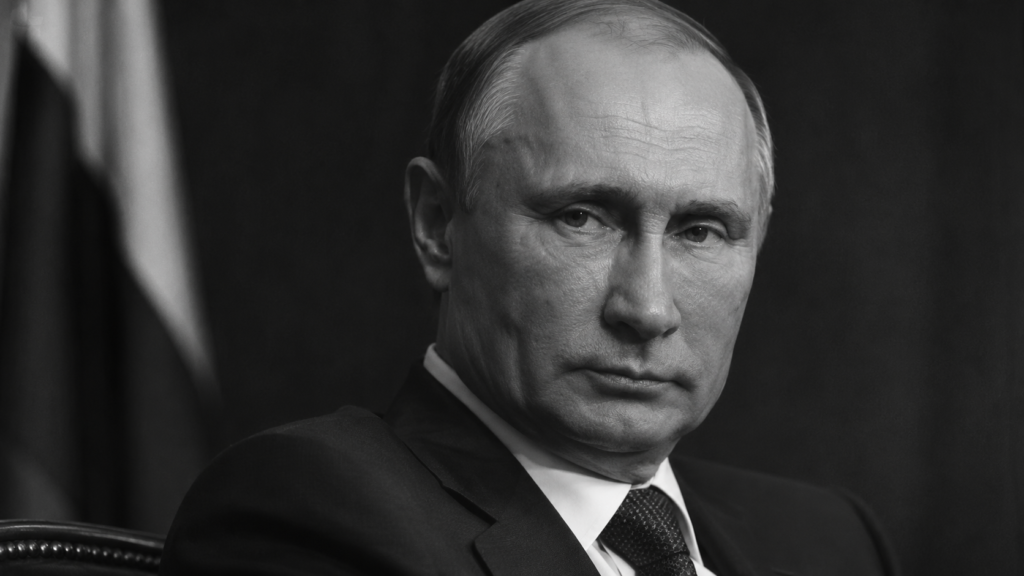
Early Life, Education, KGB Career, Presidency, Achievements and Controversies
Quick Biography Facts
| Information | Details |
|---|---|
| Full Name | Vladimir Vladimirovich Putin |
| Popular Name | Vladimir Putin |
| Date of Birth | October 7, 1952 |
| Age | 74 years (as of November 2026) |
| Place of Birth | Leningrad, Soviet Union (now St. Petersburg, Russia) |
| Nationality | Russian |
| Profession | Politician and former intelligence officer |
| Current Position | President of Russia |
| Father | Vladimir Spiridonovich Putin |
| Mother | Maria Ivanovna Putina |
| Education | Leningrad State University |
| Academic Qualification | Law Degree (1975) |
| Former Organization | KGB |
| KGB Rank | Lieutenant Colonel |
| Former Wife | Lyudmila Putina |
| Children | Two publicly acknowledged daughters |
| Political Mentor | Anatoly Sobchak |
| First Presidential Term | 2000–2008 |
| Prime Minister | 2008–2012 |
| Current Presidential Term Began | May 7, 2024 |
1. Introduction
Vladimir Vladimirovich Putin is a Russian politician and former intelligence officer who has served as President of the Russian Federation for much of the period since 2000. Born on October 7, 1952, in Leningrad, Soviet Union, now known as St. Petersburg, Putin rose from a relatively modest family background to become one of the most powerful and influential political leaders in modern international politics.
Before entering politics, Putin spent approximately 16 years working for the Soviet Union’s Committee for State Security, commonly known as the KGB. His intelligence career included assignments in Leningrad and Dresden, East Germany, where he worked during the final years of the Cold War.
After returning to Russia in 1990, he entered public administration in St. Petersburg under the leadership of Anatoly Sobchak. His subsequent move to Moscow in 1996 marked the beginning of a rapid rise through the Russian presidential administration.
In July 1998, President Boris Yeltsin appointed Putin director of the Federal Security Service (FSB), the principal domestic successor to the KGB. He became Prime Minister in August 1999 and Acting President on December 31, 1999, following Yeltsin’s resignation.
Putin won his first presidential election in March 2000 and served two consecutive terms until 2008. He subsequently served as Prime Minister from 2008 to 2012 before returning to the presidency in May 2012.
His leadership has profoundly influenced Russia’s political system, economy, military strategy and foreign relations. His presidency has also attracted considerable international controversy, particularly concerning political freedoms, democratic institutions, human rights and Russia’s military actions in Ukraine.
As of November 2026, Vladimir Putin remains the President of the Russian Federation.
2. Early Life and Family Background
Vladimir Putin was born on October 7, 1952, in Leningrad, a major Soviet industrial city now known as St. Petersburg, Russia.
He was the youngest child of Vladimir Spiridonovich Putin and Maria Ivanovna Putina.
His father worked in a factory and had previously served in the Soviet Navy, including during the Second World War. He was also involved in the defence of Leningrad during the devastating German siege of the city.
His mother, Maria, worked in a factory and experienced the severe hardships associated with wartime and postwar Soviet life.
Putin was born into a family that had experienced significant personal loss. His two older brothers, Albert and Viktor, died during childhood. Albert died before Putin was born, while Viktor died during the siege of Leningrad.
Consequently, Vladimir became the only surviving child of his parents.
2.1 Family Background and Ancestry
Putin’s family came from a modest working-class background.
His paternal grandfather, Spiridon Ivanovich Putin, worked as a cook and reportedly served at residences associated with Vladimir Lenin and Joseph Stalin.
His parents’ experiences during the Second World War and the difficult postwar years formed an important part of the family history that Putin has discussed publicly.
The family’s circumstances were far removed from the political power and international influence he would later acquire.
3. Childhood and Upbringing
Vladimir Putin spent most of his childhood in Leningrad.
His family lived in a communal apartment, known in Russian as a kommunalka, where several families shared facilities such as kitchens and bathrooms.
These communal living arrangements were common in Soviet cities during the postwar period.
Growing up in a relatively modest environment, Putin developed an interest in sports, particularly wrestling and martial arts.
3.1 Interest in Martial Arts
Putin began practising sambo, a Soviet-developed martial art, before developing a strong interest in judo.
He later became a highly dedicated judoka and achieved a black belt.
Martial arts remained an important part of his public image throughout his political career.
He has frequently presented discipline, physical fitness, competition and self-control as important personal values.
3.2 Early Interest in Intelligence Work
Putin developed an interest in intelligence work during his teenage years.
According to accounts he later shared in interviews, he became fascinated by Soviet intelligence officers after reading stories about spies and watching films involving intelligence operations.
At approximately 16 years old, he reportedly visited a KGB office in Leningrad to ask how he could join the organization.
He was advised that the KGB did not normally recruit individuals who simply volunteered and that he should first obtain a university education.
This experience influenced his decision to study law at Leningrad State University, a qualification that eventually helped him enter the intelligence service.
4. Education and Academic Background
Putin attended secondary school in Leningrad, where he developed interests in sports, languages and Soviet political history.
He was particularly interested in German, a language that later became important during his intelligence assignment in East Germany.
4.1 Leningrad State University (1970–1975)
In 1970, Putin entered the Law Faculty of Leningrad State University.
The university was one of the major higher education institutions in the Soviet Union.
During his studies, he concentrated on legal subjects and developed an understanding of Soviet state institutions and administrative systems.
He graduated in 1975 with a degree in law.
His university education became an important stepping stone toward his recruitment into the KGB.
One of his university professors was Anatoly Sobchak, who later became a prominent political figure and the first democratically elected mayor of St. Petersburg.
Their academic relationship eventually developed into a professional and political association that played a major role in Putin’s early political career.
4.2 Advanced Intelligence Training
After joining the KGB, Putin received additional professional training in intelligence operations.
In the mid-1980s, he attended the Yuri Andropov Red Banner Institute in Moscow, an institution specializing in the preparation of foreign intelligence officers.
The institute was named after former Soviet leader and KGB chairman Yuri Andropov.
The training prepared Putin for overseas intelligence responsibilities and included professional development relevant to foreign intelligence operations.
His selection for the programme represented an important stage in his intelligence career.
5. Career Beginnings: Joining the KGB
Following his graduation from Leningrad State University in 1975, Putin entered the Soviet Union’s Committee for State Security, known as the KGB.
The organization was responsible for intelligence gathering, counterintelligence, internal security and political surveillance.
The KGB was one of the most influential security institutions of the Soviet Union during the Cold War.
5.1 First KGB Assignment in Leningrad (1975)
Putin began his intelligence career in the KGB’s Leningrad directorate.
His early work involved security and counterintelligence activities before he moved into foreign intelligence.
He subsequently became associated with the First Chief Directorate, the KGB branch responsible for foreign intelligence operations.
His professional development included additional intelligence training and preparation for overseas assignments.
5.2 Andropov Red Banner Institute (1984–1985)
During the mid-1980s, Putin was selected for advanced intelligence training at the Andropov Red Banner Institute in Moscow.
The programme prepared selected KGB personnel for foreign assignments.
After completing his training, he was assigned to East Germany.
5.3 Assignment to Dresden, East Germany (1985–1990)
In 1985, Putin was posted to Dresden in the German Democratic Republic, commonly known as East Germany.
He worked as a KGB foreign intelligence officer during a period of significant political tension and transformation in Europe.
His responsibilities involved gathering political intelligence, developing sources and transmitting information to KGB headquarters in Moscow.
During his assignment, he worked in an environment closely connected with the East German Ministry for State Security, commonly known as the Stasi.
The KGB and Stasi maintained extensive intelligence cooperation during the Cold War.
Putin’s Dresden assignment coincided with major developments in European politics, including the growing opposition to communist rule in Eastern Europe.
5.4 The Fall of the Berlin Wall in 1989
The fall of the Berlin Wall in November 1989 represented a major turning point in the history of East Germany and the Soviet-controlled political order in Eastern Europe.
Putin was stationed in Dresden when demonstrations and political unrest intensified.
In December 1989, demonstrators approached the local KGB headquarters.
Putin later described an incident in which he contacted Soviet military authorities seeking assistance but was reportedly told that Moscow was not responding to requests for instructions.
The experience became one of the most frequently discussed episodes of his intelligence career.
It also coincided with the wider collapse of communist governments across Eastern Europe.
5.5 Return to Leningrad in 1990
Putin returned to Leningrad in 1990 following the end of his Dresden assignment.
He subsequently worked at Leningrad State University in an administrative position connected with international relations.
His return to the university also helped reconnect him with Anatoly Sobchak, his former law professor.
Putin entered the KGB’s active reserve during this period and eventually left active intelligence service in 1991.
5.6 Resignation from the KGB in 1991
In August 1991, during the attempted coup against Soviet leader Mikhail Gorbachev, Putin formally resigned from the KGB.
The Soviet Union was experiencing a major political crisis, and its political and security institutions were undergoing significant changes.
Putin subsequently concentrated on civilian administration and local politics.
His departure from the KGB marked the beginning of a new professional chapter.
6. Political Career and Rise to Power
Putin’s transition from intelligence work to politics began in St. Petersburg during the final years of the Soviet Union.
His relationship with Anatoly Sobchak provided an important entry point into public administration.
6.1 Working with Anatoly Sobchak (1990–1996)
In 1990, Putin became an adviser to Anatoly Sobchak, who was emerging as an important reform-minded political figure in Leningrad.
Sobchak had previously taught Putin at Leningrad State University.
After Sobchak became mayor in 1991, Putin was appointed to a senior administrative position dealing with international relations.
He later became chairman of the Committee for External Relations of the St. Petersburg City Administration.
His responsibilities included promoting international economic cooperation, attracting foreign investment and managing aspects of the city’s external commercial relationships.
6.2 Deputy Mayor of St. Petersburg (1994)
By 1994, Putin had become First Deputy Mayor of St. Petersburg.
This position increased his administrative responsibilities and gave him greater involvement in the city’s political and economic affairs.
He worked closely with Sobchak during a difficult period marked by the economic transition from Soviet-style central planning to a market-oriented system.
Putin’s experience in local government provided the foundation for his later work in the Russian presidential administration.
6.3 Export Licence Investigation and Controversy (1991–1992)
During his time as chairman of the Committee for External Relations, Putin became associated with a controversy involving export licences and food supplies.
The investigation concerned contracts involving the export of raw materials in exchange for food intended to address shortages in St. Petersburg.
Critics, including city council member Marina Salye, questioned the management of these contracts and alleged that the city did not receive the expected food supplies.
The controversy resulted in accusations of administrative misconduct and inadequate supervision.
Putin denied wrongdoing, and the allegations should not be presented as an established criminal conviction.
The episode remains part of the disputed history surrounding his early years in public administration.
6.4 Move to Moscow (1996)
After Anatoly Sobchak lost his re-election campaign in 1996, Putin moved to Moscow.
He joined the Russian presidential administration and became deputy to Pavel Borodin, who managed the presidential property administration.
His responsibilities involved administrative and organizational matters connected with the presidential apparatus.
His move to Moscow marked a major turning point in his political career.
6.5 Deputy Chief of Presidential Staff (1997)
In March 1997, Putin was appointed Deputy Chief of the Presidential Staff under President Boris Yeltsin.
He subsequently became involved in the Main Control Directorate, an institution responsible for monitoring aspects of government administration.
These appointments placed him closer to the centre of Russian national political power.
6.6 Director of the FSB (1998)
On July 25, 1998, President Boris Yeltsin appointed Putin Director of the Federal Security Service (FSB).
The FSB had succeeded the KGB’s principal domestic security functions following the dissolution of the Soviet Union.
The appointment represented one of the most important stages of Putin’s rise to national prominence.
In March 1999, he was also appointed Secretary of Russia’s Security Council.
These positions increased his influence over national security and the Russian political establishment.
6.7 Appointment as Prime Minister (August 1999)
On August 9, 1999, President Yeltsin appointed Putin as one of Russia’s First Deputy Prime Ministers and acting head of government.
Shortly afterwards, he became Prime Minister.
At the time, Putin was relatively unknown to much of the Russian public.
However, his political profile increased during the Second Chechen War, when the Russian government launched a major military campaign against Chechen separatist forces.
His public image became associated with a strong approach to national security and the restoration of federal authority.
6.8 Becoming Acting President (December 31, 1999)
On December 31, 1999, Boris Yeltsin unexpectedly announced his resignation.
Under the Russian Constitution, Prime Minister Vladimir Putin became Acting President.
Yeltsin also publicly endorsed Putin as his preferred successor.
This marked the beginning of Putin’s direct leadership of the Russian Federation.
7. Presidency of Russia and Political Leadership
Vladimir Putin’s presidency has been one of the defining periods in contemporary Russian political history.
His administration has overseen major changes in Russia’s government, economy, military policy and international relationships.
7.1 First Presidential Election (2000)
On March 26, 2000, Putin won Russia’s presidential election.
He received approximately 53 percent of the vote in the first round and officially began his first presidential term on May 7, 2000.
His early presidency focused on strengthening federal authority, improving economic stability and restoring the influence of the Russian state.
He also pursued changes to the relationship between the federal government and regional authorities.
7.2 Second Presidential Term (2004–2008)
Putin won re-election in March 2004 and began his second presidential term in May of that year.
During this period, Russia experienced significant economic growth, supported partly by high international energy prices.
The government increased its influence over major industries and pursued policies intended to strengthen national economic and political stability.
However, his administration also attracted criticism over the concentration of political power and the treatment of independent media and opposition groups.
7.3 Prime Minister of Russia (2008–2012)
Under the Russian constitutional arrangement then in force, Putin could not immediately serve a third consecutive presidential term in 2008.
Dmitry Medvedev won the presidential election in March 2008 and appointed Putin Prime Minister.
Putin remained one of the most influential political figures in Russia during this period.
He continued to exercise substantial influence over government policy and national political direction.
The period was also marked by the 2008 Russia–Georgia war.
7.4 Return to the Presidency (2012)
On March 4, 2012, Putin won another presidential election.
He returned to the presidency on May 7, 2012.
The constitutional presidential term had been extended from four years to six years, meaning his new term was scheduled to last until 2018.
His return was accompanied by significant public demonstrations and criticism from opposition movements concerning political competition and election conditions.
7.5 Annexation of Crimea and Conflict in Ukraine (2014)
In 2014, Russia took control of Crimea following the removal of Ukraine’s President Viktor Yanukovych.
Russia subsequently incorporated Crimea into its territory after a disputed referendum.
Ukraine and most countries in the international community rejected the annexation as illegal.
The development resulted in international sanctions against Russia and significantly worsened relations between Russia and Western governments.
The conflict in eastern Ukraine also intensified during this period.
7.6 Re-election in 2018
Putin won the March 2018 presidential election and began another six-year term on May 7, 2018.
His administration continued to emphasize national security, economic sovereignty and Russia’s position as a major international power.
During this period, Russia also expanded its military and diplomatic involvement in international conflicts, including its continued intervention in Syria.
7.7 Constitutional Amendments in 2020
In 2020, Russia adopted major constitutional amendments.
One particularly significant provision effectively reset the presidential term count for Putin and Dmitry Medvedev.
This allowed Putin to seek additional presidential terms beyond the limits that would otherwise have applied.
The amendments were approved through a nationwide voting process and subsequently signed into law.
The changes attracted international criticism because they substantially altered the constitutional framework governing presidential tenure.
7.8 Full-Scale Invasion of Ukraine (2022)
On February 24, 2022, Putin announced a full-scale military invasion of Ukraine.
The Russian government described the operation as a special military operation.
Ukraine and many governments around the world condemned the invasion as a violation of Ukrainian sovereignty and international law.
The conflict triggered extensive international sanctions against Russia and resulted in widespread destruction, displacement and loss of life.
The invasion also significantly altered European security arrangements and Russia’s relationships with Western countries.
7.9 International Criminal Court Arrest Warrant (2023)
On March 17, 2023, the International Criminal Court issued an arrest warrant for Vladimir Putin.
The ICC stated that there were reasonable grounds to believe he bore individual criminal responsibility for the alleged war crimes of unlawful deportation and transfer of children from occupied areas of Ukraine to the Russian Federation.
The allegations concern events following the full-scale invasion of Ukraine.
The warrant is a judicial measure based on alleged criminal responsibility; it is not a criminal conviction.
Putin’s government rejected the ICC’s jurisdiction and the allegations.
7.10 Fifth Presidential Term (2024–2030)
Putin won the March 2024 presidential election and was inaugurated on May 7, 2024.
The official results credited him with approximately 87 percent of the vote.
The election attracted substantial international criticism.
Several governments and independent observers raised concerns about political competition, restrictions on opposition candidates, media freedom and the absence of an OSCE election observation mission.
The European Parliament described the election as undemocratic, while the Russian government defended its legitimacy.
His fifth presidential term is scheduled to continue until 2030.
As of November 2026, Putin remains Russia’s president.
8. Major Achievements and Political Milestones
Vladimir Putin’s career has included several important political and institutional milestones.
His supporters often associate his leadership with the restoration of state authority, economic recovery and the strengthening of Russia’s international position.
His critics emphasize the concentration of political power, restrictions on civil liberties and the consequences of Russian foreign policy.
Important milestones include:
| Year | Achievement or Milestone |
|---|---|
| 1975 | Graduated from Leningrad State University and joined the KGB |
| 1985 | Began intelligence assignment in Dresden |
| 1990 | Returned to Leningrad and entered civilian administration |
| 1991 | Resigned from the KGB |
| 1996 | Joined the Russian presidential administration |
| 1998 | Appointed Director of the FSB |
| 1999 | Became Prime Minister |
| 1999 | Became Acting President |
| 2000 | Elected President of Russia |
| 2004 | Re-elected President |
| 2008 | Became Prime Minister |
| 2012 | Returned to the presidency |
| 2014 | Russia annexed Crimea |
| 2018 | Re-elected President |
| 2020 | Constitutional amendments enabled additional presidential terms |
| 2024 | Began fifth presidential term |
8.1 Strengthening Federal Government Authority
One of the central features of Putin’s early presidency was the strengthening of the federal government’s authority over Russia’s regions.
His administration introduced administrative changes intended to increase coordination between the Kremlin and regional governments.
Supporters argued that these measures helped stabilize the country after the political and economic turmoil of the 1990s.
Critics argued that they weakened regional autonomy and concentrated power in the presidency.
8.2 Economic Development
During Putin’s first two presidential terms, Russia experienced substantial economic growth.
High oil and natural gas prices contributed to increased government revenues, improved fiscal stability and rising living standards for many Russian households.
The government also repaid significant portions of Russia’s external debt and accumulated financial reserves.
However, economic growth was also influenced by broader international market conditions and reforms that began before Putin became president.
8.3 International Influence
Putin has pursued a foreign policy intended to maintain Russia’s position as a major international power.
His government has emphasized military strength, strategic partnerships and Russian influence in neighbouring countries.
Russia has also maintained important relationships with China, India, Iran and other states.
At the same time, relations with the United States and European countries have deteriorated significantly, particularly following the annexation of Crimea and the 2022 invasion of Ukraine.
9. Awards and Honours
Vladimir Putin has received numerous national and international awards during his political career.
These honours have come from Russia and several foreign governments.
Selected examples include:
| Year | Award or Honour | Country |
|---|---|---|
| 2001 | Order of Ho Chi Minh | Vietnam |
| 2004 | Order of the Golden Eagle | Kazakhstan |
| 2006 | Grand Cross of the Legion of Honour | France |
| 2007 | Order of Abdulaziz Al Saud | Saudi Arabia |
| 2007 | Order of Zayed | United Arab Emirates |
| 2010 | Order of the Liberator | Venezuela |
| 2012 | Order of the State of Palestine | Palestine |
| 2014 | Order of José Martí | Cuba |
| 2018 | Order of Friendship | China |
| 2024 | Order of Kim Il Sung | North Korea |
These honours reflect diplomatic relationships and recognition by different governments.
However, foreign awards should not automatically be interpreted as universal recognition of his political leadership.
10. Personal Life
Vladimir Putin has maintained a highly private personal life despite his position as one of the world’s most prominent political leaders.
He married Lyudmila Shkrebneva on July 28, 1983.
Lyudmila was a former flight attendant, and their relationship began before Putin’s rise to national political prominence.
10.1 Marriage to Lyudmila Putina
The couple lived together for approximately three decades.
During Putin’s KGB assignment in East Germany, Lyudmila and their family lived with him in Dresden.
Their marriage became part of the public record during his early years in the Kremlin.
In June 2013, Vladimir and Lyudmila publicly announced that their marriage had ended.
Their divorce was subsequently finalized in 2014.
10.2 Children
Putin and Lyudmila have two publicly acknowledged daughters:
- Maria Vorontsova
- Katerina Tikhonova
Both daughters have maintained relatively private public profiles compared with other members of prominent political families.
Maria has been associated with medical and scientific work, while Katerina has been associated with academic and organizational activities.
Putin rarely discusses his family in detail during public appearances.
10.3 Hobbies and Personal Interests
Putin has frequently presented himself as an active individual with interests in physical fitness and sports.
His interests include:
- Judo
- Sambo
- Ice hockey
- Swimming
- Physical fitness
- Outdoor activities
He has also demonstrated an interest in Russian history, literature and international relations.
His public appearances frequently include sporting activities, although the extent of his private interests is not always independently documented.
11. Business Interests, Investments and Wealth
Vladimir Putin’s financial position has attracted considerable international attention because of his long period in political power.
However, establishing his actual personal wealth is difficult.
11.1 Official Financial Disclosures
Russian presidential candidates and public officials have been required to submit financial declarations under applicable Russian regulations.
These declarations provide information about officially reported income, property and certain financial interests.
However, official declarations do not necessarily establish the full economic interests or financial arrangements associated with a political leader.
11.2 Allegations Concerning Hidden Wealth
Over the years, investigative journalists and political critics have published claims suggesting that Putin may have access to substantial wealth through associates, business relationships and assets linked to people close to him.
Some investigations have alleged that wealthy businessmen with connections to the Kremlin hold assets that may benefit Putin.
Putin has denied allegations that he secretly controls enormous private fortunes.
These claims remain politically contested and should not be presented as independently established facts.
11.3 Vladimir Putin Net Worth
There is no independently verified public figure that reliably establishes Vladimir Putin’s total personal net worth.
Various publications have published estimates ranging from tens of billions to much higher figures.
However, these estimates often rely on indirect evidence, disputed ownership claims or assumptions about assets associated with people close to him.
For this reason, a precise net worth figure cannot be responsibly stated as an established fact.
A professional biography should distinguish between official financial declarations and speculative estimates.
12. Challenges and Controversies
Putin’s political career has been accompanied by significant domestic and international controversies.
His administration has been criticized by human rights organizations, political opposition groups and foreign governments.
12.1 Political Centralization and Democratic Institutions
One of the most significant criticisms of Putin’s leadership concerns the concentration of political power within the presidency.
During his years in office, Russia’s political institutions have undergone substantial changes.
Critics argue that restrictions on independent media, political opposition and civil society have weakened democratic competition.
The Russian government maintains that its political system operates under national constitutional and legal frameworks.
12.2 Chechen Wars
The Second Chechen War began in 1999 during the period when Putin was Prime Minister.
The Russian government launched a major military campaign to restore federal control over Chechnya.
The conflict resulted in extensive destruction and significant civilian casualties.
Putin’s firm position on Chechnya contributed to his early political popularity among Russians who wanted stronger central government authority.
However, human rights organizations documented serious abuses and violations associated with the conflict.
12.3 Annexation of Crimea
Russia’s annexation of Crimea in 2014 became one of the most consequential events of Putin’s foreign policy.
The move was rejected by Ukraine and most of the international community.
The United Nations General Assembly adopted a resolution affirming Ukraine’s territorial integrity and calling on states not to recognize the change in Crimea’s status.
The annexation resulted in extensive sanctions against Russia.
12.4 Full-Scale Invasion of Ukraine
Russia’s invasion of Ukraine in February 2022 generated one of the most serious international crises in Europe since the Second World War.
The conflict has resulted in extensive military destruction, civilian casualties and displacement.
It has also led to major economic sanctions against Russia and changes in European defence and security policies.
The Russian government has defended its military actions, while Ukraine and many other countries regard the invasion as an unlawful act of aggression.
12.5 International Criminal Court Arrest Warrant
The ICC arrest warrant issued in March 2023 represents a major legal controversy surrounding Putin’s presidency.
The court identified alleged responsibility for the unlawful deportation and transfer of Ukrainian children from occupied territories.
The warrant remains an allegation within an ongoing international legal framework rather than a final conviction.
12.6 Treatment of Political Opposition
Putin’s government has also faced sustained criticism over the treatment of opposition figures and political activists.
The cases of Alexei Navalny and other critics attracted international attention.
Navalny, a prominent Russian opposition politician, was imprisoned after returning to Russia in 2021 and died in a Russian penal colony in February 2024.
Russian authorities have denied wrongdoing in relation to various accusations made against the state.
International human rights organizations have continued to criticize restrictions on political activity, public demonstrations and independent journalism.
13. Legacy and Influence
Vladimir Putin’s political legacy is one of the most debated subjects in modern international politics.
Supporters view him as a leader who restored Russia’s national confidence after the instability of the 1990s, strengthened central government institutions and expanded the country’s international influence.
They frequently point to economic growth during his early presidency, the strengthening of state finances and the restoration of Russia’s role in international affairs.
Critics, however, argue that his leadership has weakened democratic institutions, restricted political freedoms and contributed to the deterioration of Russia’s relationships with Western countries.
The annexation of Crimea in 2014 and the full-scale invasion of Ukraine in 2022 have become defining events in assessments of his foreign policy.
His presidency has also raised important questions about constitutional term limits, political succession and the concentration of executive power.
By November 2026, Putin has been one of the longest-serving leaders in modern Russian history, having occupied either the presidency or the position of prime minister since 1999.
His eventual historical legacy will likely be assessed through the long-term consequences of his domestic policies, foreign interventions, economic decisions and the future political development of Russia.
14. Frequently Asked Questions About Vladimir Putin
1. Who is Vladimir Putin?
Vladimir Putin is a Russian politician and former KGB intelligence officer who has served as President of Russia for much of the period since 2000.
2. What is Vladimir Putin’s full name?
His full name is Vladimir Vladimirovich Putin.
3. When was Vladimir Putin born?
He was born on October 7, 1952.
4. Where was Vladimir Putin born?
He was born in Leningrad, Soviet Union, which is now known as St. Petersburg, Russia.
5. How old is Vladimir Putin?
He is 74 years old as of November 2026.
6. Who are Vladimir Putin’s parents?
His parents were Vladimir Spiridonovich Putin and Maria Ivanovna Putina.
7. What did Vladimir Putin study?
He studied law at Leningrad State University and graduated in 1975.
8. Did Vladimir Putin work for the KGB?
Yes. He joined the KGB in 1975 and worked as an intelligence officer until leaving active service in 1991.
9. What was Vladimir Putin’s rank in the KGB?
He attained the rank of Lieutenant Colonel.
10. When did Vladimir Putin work in East Germany?
He was stationed in Dresden, East Germany, from 1985 until 1990.
11. What was Putin doing in Dresden?
He worked as a foreign intelligence officer, gathering political intelligence and developing sources for the Soviet KGB.
12. When did Vladimir Putin leave the KGB?
He formally resigned from the KGB in August 1991.
13. Who was Anatoly Sobchak?
Anatoly Sobchak was a Russian politician and former mayor of St. Petersburg who became one of Putin’s important political mentors.
14. When did Vladimir Putin become Director of the FSB?
He was appointed Director of the Federal Security Service in July 1998.
15. When did Vladimir Putin become Prime Minister?
He became Prime Minister of Russia in August 1999.
16. When did Vladimir Putin first become President?
He became Acting President on December 31, 1999, and was elected President in March 2000.
17. How many times has Vladimir Putin been President?
He has won five presidential elections: 2000, 2004, 2012, 2018 and 2024. He also served as Acting President from December 1999 to May 2000.
18. Was Vladimir Putin ever Prime Minister?
Yes. He served as Prime Minister from August 1999 to May 2000 and again from May 2008 to May 2012.
19. Who was Russia’s president between Putin’s first and second presidential periods?
Dmitry Medvedev served as President from 2008 to 2012 while Putin was Prime Minister.
20. Is Vladimir Putin still President of Russia?
Yes. As of November 2026, he remains President of Russia. His fifth presidential term began on May 7, 2024.
21. Who is Vladimir Putin’s wife?
His former wife is Lyudmila Putina, whom he married in 1983 and divorced in 2014.
22. How many children does Vladimir Putin have?
He has two publicly acknowledged daughters, Maria Vorontsova and Katerina Tikhonova.
23. What is Vladimir Putin’s net worth?
His actual personal net worth has not been independently verified. Published estimates vary considerably and should be treated cautiously.
24. Why did Vladimir Putin invade Ukraine?
Putin and the Russian government have presented several justifications for the invasion, including security concerns and claims concerning Ukraine’s political and military alignment. Ukraine and many countries reject these justifications and describe the invasion as an illegal act of aggression.
25. Has Vladimir Putin been issued an international arrest warrant?
Yes. The International Criminal Court issued an arrest warrant in March 2023 concerning alleged war crimes involving the unlawful deportation and transfer of children from occupied areas of Ukraine.
26. What is Vladimir Putin famous for?
He is famous for his long political leadership of Russia, his previous KGB career, his influence on international relations and his role in major geopolitical developments.
27. Does Vladimir Putin speak German?
Yes. He learned German during his intelligence career and spent several years working in Dresden, East Germany.
28. Does Vladimir Putin practise martial arts?
Yes. He has a long history of practising judo and sambo.
References and Sources
The following sources provide information about Vladimir Putin’s biography, education, intelligence career, political history and international controversies.
Biographical and Historical Sources
- Encyclopaedia Britannica – Vladimir Putin Biography
https://www.britannica.com/biography/Vladimir-Putin - Biography.com – Vladimir Putin
https://www.biography.com/political-figures/vladimir-putin - Brookings Institution – Who Is Mr. Putin?
https://www.brookings.edu/wp-content/uploads/2016/07/mrputin_chapter-1.pdf - First Person: An Astonishingly Frank Self-Portrait by Russia’s President Vladimir Putin
https://books.google.com/books/about/First_Person.html?id=AYzDoBwNR0sC - The Washington Post – Putin Book Details His KGB Past
https://www.washingtonpost.com/archive/politics/2000/03/14/putin-book-details-his-kgb-past/ - BBC – Vladimir Putin’s Formative German Years
https://www.bbc.com/news/magazine-32066222 - HISTORY – Vladimir Putin: Russia, President and Ukraine
https://www.history.com/articles/vladimir-putin
Political Career and Presidency
- Associated Press – Key Events of Vladimir Putin’s 24 Years in Power
https://apnews.com/article/413e4d80b14c7b4113f1abe576e4a5c2 - Associated Press – Putin Begins His Fifth Presidential Term
https://apnews.com/article/355bd36a2e833800187af848dc24a7dc - Interfax – Putin Sworn in as Russian President for Fifth Time
https://interfax.com/newsroom/top-stories/102063/ - European Parliament – Russia’s 2024 Presidential Election
https://www.europarl.europa.eu/RegData/etudes/BRIE/2024/760358/EPRS_BRI%282024%29760358_EN.pdf - United Nations – Russia’s Constitutional and Political Framework
https://digitallibrary.un.org/
Intelligence Career and Early Political Controversies
- Correctiv – Putin’s Early Years
https://correctiv.org/en/latest-stories/the-system-of-putin/2015/07/30/putins-early-years/ - Federal Agency for the Records of the State Security Service of the Former GDR – Historical Archives
https://www.bundesarchiv.de/ - Wilson Center – Has Vladimir Putin Always Been Corrupt? And Does It Matter?
https://www.wilsoncenter.org/event/has-vladimir-putin-always-been-corrupt-and-does-it-matter - Radio Free Europe/Radio Liberty – Putin’s Stamp and the $2 Million Heist
https://www.rferl.org/a/putin-bribe-scandal/31867449.html
International Law and Human Rights
- International Criminal Court – Vladimir Vladimirovich Putin
https://www.icc-cpi.int/defendant/vladimir-vladimirovich-putin - International Criminal Court – Arrest Warrant Announcement, March 17, 2023
https://www.icc-cpi.int/news/situation-ukraine-icc-judges-issue-arrest-warrants-against-vladimir-vladimirovich-putin-and - Human Rights Watch – Russia
https://www.hrw.org/europe/central-asia/russia - Amnesty International – Russia
https://www.amnesty.org/en/location/europe-and-central-asia/russia/
Personal and Family Background
- The Guardian – Who Are the Daughters of Vladimir Putin?
https://www.theguardian.com/world/2022/apr/06/who-are-the-daughters-of-vladimir-putin-facing-us-sanctions - ABC News – The Private Life of Vladimir Putin
https://www.abc.net.au/news/2022-03-19/the-secret-life-of-vladimir-putin/100898550
Frequently Asked Questions
Who is Vladimir Putin Biography?
Early Life, Education, KGB Career, Presidency, Achievements and Controversies Quick Biography Facts Information Details Full Name Vladimir Vladimirovich Putin Popular Name Vladimir Putin Date of Birth October 7, […]
What is Vladimir Putin Biography known for?
Read the biography above for a summary of their work, public life and notable achievements.
Related Biographies
Warren Buffett Biography
Early Life, Education, Career, Investments, Net Worth and Achievements Warren Buffett (born August 30, 1930) is an American investor, business leader and philanthropist widely…
Leonardo DiCaprio Biography
Early Life, Education, Movies, Awards, Career and Net Worth Quick Biography Facts Information Details Full Name Leonardo Wilhelm DiCaprio Popular Name Leonardo DiCaprio Nickname…
Donald Trump – Biography
Introduction Donald Trump is an American businessman, real estate developer, television personality, political figure, and the 47th President of the United States. He previously…
Larry Page Biography
Early Life, Education, Google, Career, Net Worth and Achievements Introduction Lawrence Edward Page, popularly known as Larry Page, is an American computer scientist, internet…